GI Sheet vs HR Sheet vs CR Sheet: Differences, Thickness, and Uses
20th Nov 2026
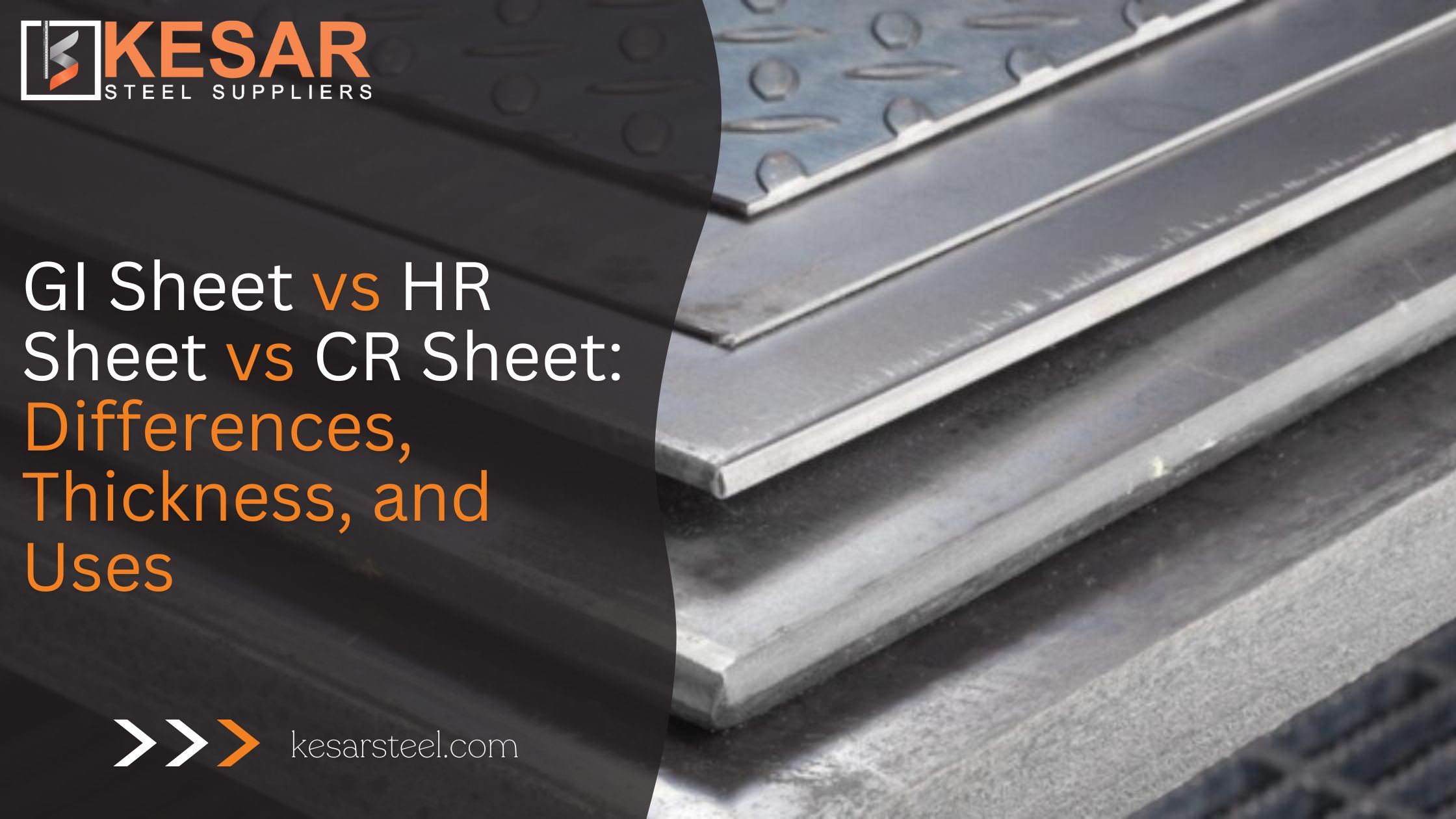
Choosing the right steel sheet is important for the strength, durability, finish, and overall cost of any project. GI, HR, and CR sheets are widely used in construction, fabrication, manufacturing, automotive work, and industrial applications. However, they differ in how they are manufactured, their surface finish, corrosion resistance, and suitability for different environments.
Understanding the difference between GI sheet vs HR sheet vs CR sheet can help contractors, fabricators, manufacturers, and buyers select the right material for their requirements. This guide explains their properties, thickness considerations, applications, and factors to check before purchasing steel sheets in Vapi.
What Is a GI Sheet? Understanding Galvanized Iron Sheets
A GI (Galvanized Iron) sheet is a steel sheet coated with a protective layer of zinc. This zinc coating helps reduce corrosion by creating a barrier between the steel and its surrounding environment. It also provides additional protection through the sacrificial action of zinc if the coating is locally damaged.
GI sheets are commonly used where exposure to moisture and weather makes corrosion protection important. Their performance depends on factors such as the thickness and quality of the zinc coating, the underlying steel grade, and the surrounding conditions.
Common applications of GI sheets include:
- Roofing sheets and wall cladding
- Ducting and ventilation systems
- Electrical panels and enclosures
- Industrial cabinets and equipment covers
- Fabricated components and general construction
GI sheets are a practical choice for many applications requiring a corrosion-resistant surface. However, the zinc coating can be damaged during cutting, welding, or fabrication, so suitable handling and protection may be necessary.
What Is an HR Sheet? Features of Hot Rolled Steel Sheets
An HR (Hot Rolled) sheet is produced by rolling steel at high temperatures. The process makes the material easier to shape and form into different thicknesses and dimensions.
Hot rolled sheets generally have a rougher surface finish and less precise dimensional tolerances than cold rolled sheets. They are commonly selected for applications where structural performance, fabrication requirements, and cost are more important than a smooth surface appearance.
Common applications of HR sheets include:
- Structural fabrication
- Industrial machinery and equipment
- Automotive components
- Construction and engineering projects
- General metal fabrication
HR sheets are suitable for heavy-duty applications, but their surface condition may require additional processing if a smoother finish or specific dimensional accuracy is needed.
What Is a CR Sheet? Understanding Cold Rolled Steel Sheets
A CR (Cold Rolled) sheet is manufactured by further rolling steel at or near room temperature, typically after hot rolling and pickling. This additional processing improves dimensional accuracy and surface quality.
CR sheets usually have a smoother finish, closer thickness tolerances, and better suitability for applications involving detailed forming or visible surfaces. Cold rolling also changes the mechanical properties of the steel, so the selected grade should match the intended fabrication process.
Common applications of CR sheets include:
- Electrical panels and control cabinets
- Furniture and storage systems
- Automotive body components
- Home appliances
- Precision fabrication and enclosures
CR sheets are often preferred when surface appearance, consistent dimensions, and formability are important.
GI Sheet vs HR Sheet vs CR Sheet: Key Differences
The main difference is that GI describes a zinc-coated steel product, while HR and CR describe manufacturing processes. Therefore, these are not exactly three equivalent categories: a GI sheet may have a hot-rolled or cold-rolled steel substrate.
|
Comparison Factor |
GI Sheet |
HR Sheet |
CR Sheet |
|
Meaning |
Zinc-coated steel sheet |
Hot rolled steel sheet |
Cold rolled steel sheet |
|
Surface finish |
Zinc-coated finish |
Generally rough or scaled |
Generally smooth |
|
Corrosion resistance |
Improved by zinc coating |
Usually needs suitable protection |
Usually needs suitable protection |
|
Dimensional accuracy |
Depends on substrate and specification |
Generally less precise |
Generally more precise |
|
Appearance |
Often uniform and metallic |
Typically less smooth |
Smooth and consistent |
|
Common use |
Roofing, ducting, enclosures |
Structural and heavy fabrication |
Precision fabrication and appliances |
The right option depends on the required finish, environment, dimensions, fabrication method, and material specification.
GI vs HR vs CR Sheet: Differences in Thickness and Dimensions
Steel sheets are available in different thicknesses, widths, and lengths depending on the manufacturer, grade, product standard, and application. There is no single thickness range that applies to every GI, HR, or CR product.
Before selecting a sheet, consider:
- Required thickness: Match the thickness to the design, load, and fabrication requirements.
- Width and length: Check whether standard or cut-to-size dimensions are suitable.
- Thickness tolerance: Confirm the permitted variation in the product specification.
- Coating thickness: For GI sheets, verify the zinc coating requirement separately from the base steel thickness.
- Applicable standard: Check the relevant product grade and standard mentioned in the quotation or material documents.
Do not compare sheets only by their stated thickness. Their grade, coating, tolerances, and intended use also matter.
GI Sheet vs HR Sheet vs CR Sheet: Which Is More Durable?
Durability depends on the working environment and the type of performance required.
GI sheets offer an advantage in corrosion protection because of their zinc coating. HR sheets are useful for many fabrication and industrial applications, particularly when a smooth surface is not essential. CR sheets provide a better surface finish and dimensional consistency for precision applications.
However, a CR sheet is not automatically stronger than an HR sheet, and a GI sheet is not suitable for every outdoor or corrosive environment. Steel grade, thickness, coating quality, exposure conditions, and maintenance all influence service life.
For outdoor or moisture-prone applications, evaluate the required corrosion protection rather than choosing a sheet based on its name alone.
Common Applications of GI, HR and CR Sheets
Each sheet type serves different requirements across industries:
- Construction: GI sheets are used for roofing, cladding, and ducting, while HR sheets are used in fabrication and structural components.
- Automotive: HR and CR sheets are selected for different vehicle components depending on forming and finish requirements.
- Manufacturing: CR sheets are useful for cabinets, appliances, and precision-fabricated products.
- Industrial projects: HR sheets are commonly used for machinery, equipment, and general fabrication.
- Electrical applications: GI and CR sheets may be used for panels and enclosures depending on the required corrosion protection and finish.
Always confirm the grade and specification against the actual application.
How to Choose the Right Steel Sheet for Your Project
Before placing an order, evaluate the following points:
- Application: Identify whether the sheet will be used for roofing, fabrication, machinery, or an enclosure.
- Environment: Consider exposure to rain, moisture, chemicals, and other corrosive conditions.
- Surface finish: Decide whether a smooth, coated, or general-purpose finish is required.
- Fabrication process: Check whether the sheet needs bending, cutting, welding, or forming.
- Specification: Confirm grade, thickness, dimensions, coating, and applicable standards.
- Budget: Compare the total material cost, including processing, transportation, and wastage.
If the project has specific structural or safety requirements, consult the design engineer before finalising the material.
GI Sheet vs HR Sheet vs CR Sheet Price: What Affects the Cost?
The price of GI, HR, and CR sheets can vary with steel market conditions, thickness, grade, dimensions, coating specifications, order quantity, and supplier availability. GI sheet pricing also depends on the zinc coating specification and manufacturing process.
When comparing quotations, check whether the quoted rates include applicable taxes, cutting charges, transportation, and other costs. Compare equivalent grades and specifications rather than choosing a supplier based only on the lowest per-kilogram rate.
For bulk purchases, request a detailed quotation so that the material specifications and total landed cost are clear.
What to Check Before Buying GI, HR or CR Sheets
Before confirming your purchase, verify the material grade, thickness, width, length, surface condition, and relevant product documentation. For GI sheets, check the specified zinc coating. Also confirm the quantity, delivery schedule, cutting requirements, and transportation arrangements.
A clear purchase specification helps avoid material mismatches, delays, and unnecessary project costs.
How to Compare Steel Sheet Suppliers and Quotations in Vapi
If you are purchasing steel sheets in Vapi, compare suppliers on more than price. Check whether they can meet your required specifications, provide clear quotations, explain product details, and confirm availability and delivery timelines.
Ask for the grade, dimensions, thickness, coating details where applicable, and material documentation before placing a bulk order. Clear communication at the quotation stage can make procurement easier for contractors, fabricators, and industrial buyers.
Choose the Right Steel Sheets with Kesar Steel
Selecting between GI, HR, and CR sheets becomes easier when you understand the material's properties and match them to your project requirements. Whether you need sheets for construction, industrial fabrication, roofing, or manufacturing, confirming the correct grade, thickness, finish, and dimensions is essential.
Kesar Steel can help you discuss your steel sheet requirements and enquire about suitable material options in Vapi. Share your required specifications and quantity to request a quotation and confirm current availability.
Frequently Asked Questions About GI, HR and CR Sheets
1. What is the main difference between GI, HR, and CR sheets?
GI sheets have a zinc coating for corrosion protection, while HR sheets are produced through hot rolling and CR sheets undergo additional cold rolling for improved surface finish and dimensional accuracy.
2. Which is better: GI sheet or CR sheet?
Neither is universally better. GI sheets are suitable when zinc-coated corrosion protection is required, while CR sheets are often preferred for smooth finishes and precise dimensions. The right choice depends on the application.
3. Is an HR sheet stronger than a CR sheet?
Not necessarily. Strength depends on the steel grade, thickness, and processing conditions. Cold rolling can increase strength and hardness in some grades, but the actual mechanical properties should be checked in the material specification.
4. Are GI sheets suitable for outdoor use?
GI sheets are commonly used outdoors because their zinc coating provides corrosion protection. Their suitability depends on coating thickness, exposure conditions, installation, and maintenance.
5. How do I select the correct GI, HR, or CR sheet thickness?
Choose thickness based on the design, load, fabrication process, and applicable specifications. For structural or safety-critical applications, follow the engineer's approved material requirements.
6. Where can I enquire about steel sheets in Vapi?
You can contact Kesar Steel to discuss your GI, HR, and CR sheet requirements, confirm current availability, and request a quotation based on your required grade, thickness, dimensions, and quantity.



Copyright © Kesar Steel
. All Rights Reserved. Design by Xira Infotech