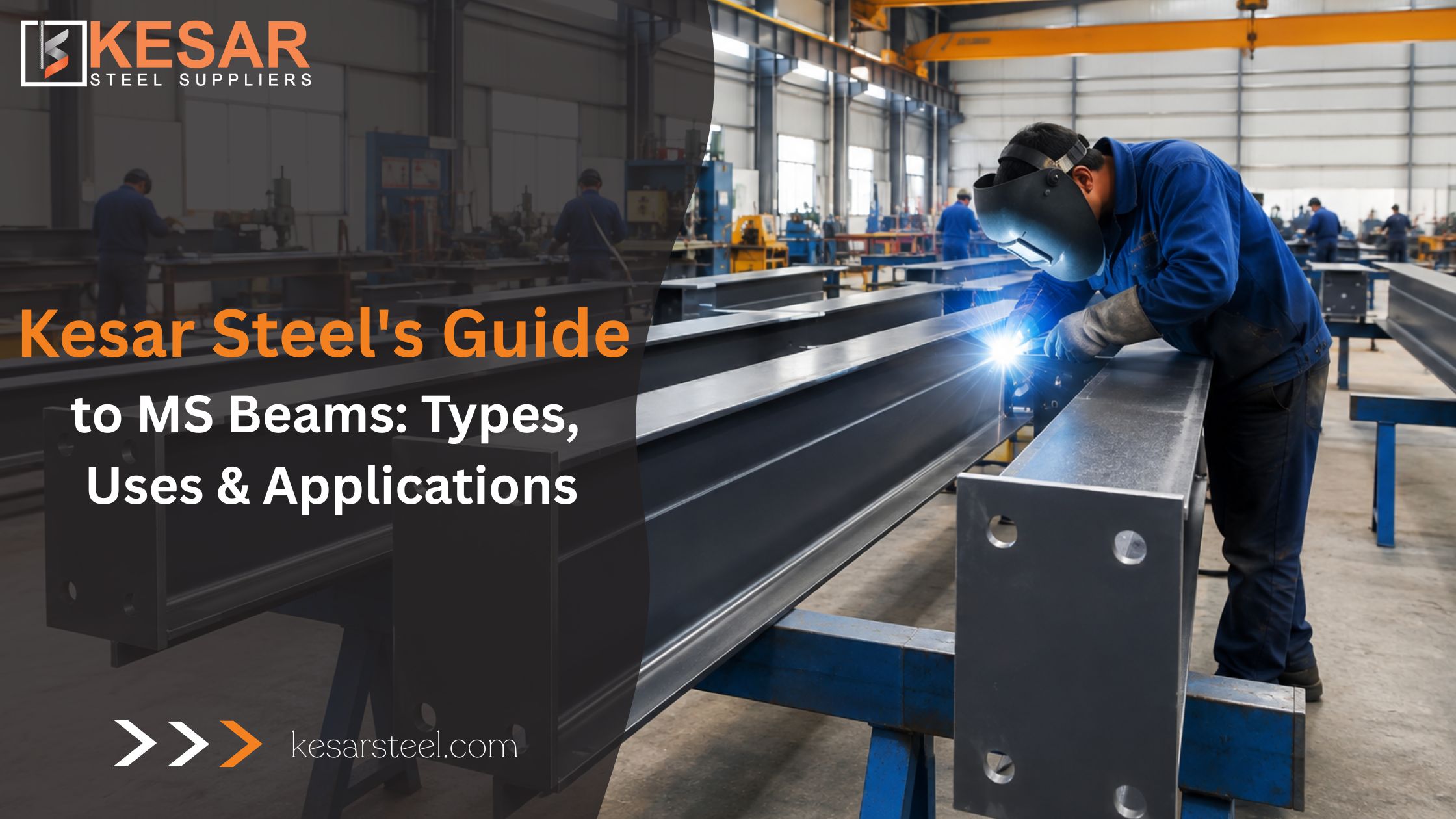
Kesar Steel's Guide to MS Beams: Types, Uses & Applications
10th Aug 2026
MS beams are among the most widely used structural steel products in the construction industry. Whether it's a residential building, commercial complex, industrial shed, warehouse, or infrastructure project, the right MS beam provides the strength and stability required for long-lasting structures.
In this guide, Kesar Steel explains everything you need to know about MS beams, including their types, applications, MS I beam sizes, specifications, weight, and selection tips. This article is designed to help builders, engineers, fabricators, and project owners make informed decisions before choosing the right structural steel beam.
Understanding MS Beams and Their Role in Construction
An MS Beam (Mild Steel Beam) is a structural steel section manufactured from low-carbon steel and designed to support heavy structural loads. It is one of the most important components used in modern construction because it provides stability, strength, and long-term structural performance.
Unlike ordinary steel sections, structural steel beams are specifically engineered to distribute loads efficiently while reducing stress on the overall structure. Their excellent weldability, fabrication flexibility, and durability make them suitable for projects of every scale.
Why Are MS Beams Widely Used?
MS beams continue to be the preferred choice because they offer:
- High load-bearing capacity
- Excellent structural strength
- Easy fabrication and welding
- Long service life
- Cost-effective construction solution
- Available in multiple sizes and ISMB sections
- Suitable for residential, commercial, and industrial projects
Key Features of MS Beams
|
Feature |
Why It Matters |
|
High Strength |
Supports heavy structural loads safely |
|
Durable Material |
Performs reliably in demanding environments |
|
Easy Fabrication |
Can be cut, drilled, and welded with ease |
|
Multiple Sizes |
Suitable for different project requirements |
|
Cost-Effective |
Reduces long-term construction costs |
|
Versatile Applications |
Used across buildings, factories, warehouses, and bridges |
Exploring Different Types of MS Beams
Different projects require different MS beam profiles based on structural design, span length, and load capacity. Understanding the available beam types helps engineers and builders choose the most suitable solution for improved safety and performance.
Common Types of MS Beams
MS I Beam
- One of the most commonly used structural steel beams.
- Ideal for residential buildings, warehouses, factories, and commercial projects.
- Available in various MS I beam sizes to meet different load requirements.
ISMB (Indian Standard Medium Beam)
- Manufactured according to Indian Standard specifications.
- Common sections include ISMB 150, ISMB 200, ISMB 250, and more.
- Widely used in industrial structures and fabrication projects.
Structural Steel Beams
- Designed for heavy-duty structural applications.
- Suitable for bridges, industrial sheds, infrastructure, and large commercial buildings.
- Provides superior load distribution and structural stability.
Quick Comparison of MS Beam Types
|
Beam Type |
Best Used For |
Main Advantage |
|
MS I Beam |
Residential & Commercial Buildings |
Excellent strength-to-weight ratio |
|
ISMB Beam |
Industrial Structures & Fabrication |
Standardized dimensions and reliable performance |
|
Structural Steel Beam |
Heavy Construction & Infrastructure |
High load-bearing capacity |
What Are the Best Features of a Popular MS Beam Product?
A high-quality MS beam should offer more than just structural support. The best products are designed to deliver consistent performance, safety, and durability across different construction environments.
Some important features include:
- Manufactured using quality mild steel
- High load-bearing capacity
- Accurate dimensions and ISMB specifications
- Excellent weldability and fabrication properties
- Corrosion-resistant surface with proper finishing
- Available in multiple MS I beam sizes
- Suitable for residential, commercial, and industrial applications
Choosing a beam with these characteristics helps improve structural performance while reducing maintenance and replacement costs over time.
Where Are MS Beams Commonly Used?
The versatility of MS beams makes them suitable for a wide range of construction and industrial applications. Their excellent strength-to-weight ratio allows them to support heavy structural loads while maintaining stability and durability. Today, mild steel beams are used across projects of every scale, from residential buildings to large industrial facilities.
Common Applications of MS Beams
- Residential buildings and multi-storey apartments
- Commercial complexes and office buildings
- Industrial sheds and manufacturing plants
- Warehouses and logistics centers
- Shopping malls and retail spaces
- Factory structures and fabrication units
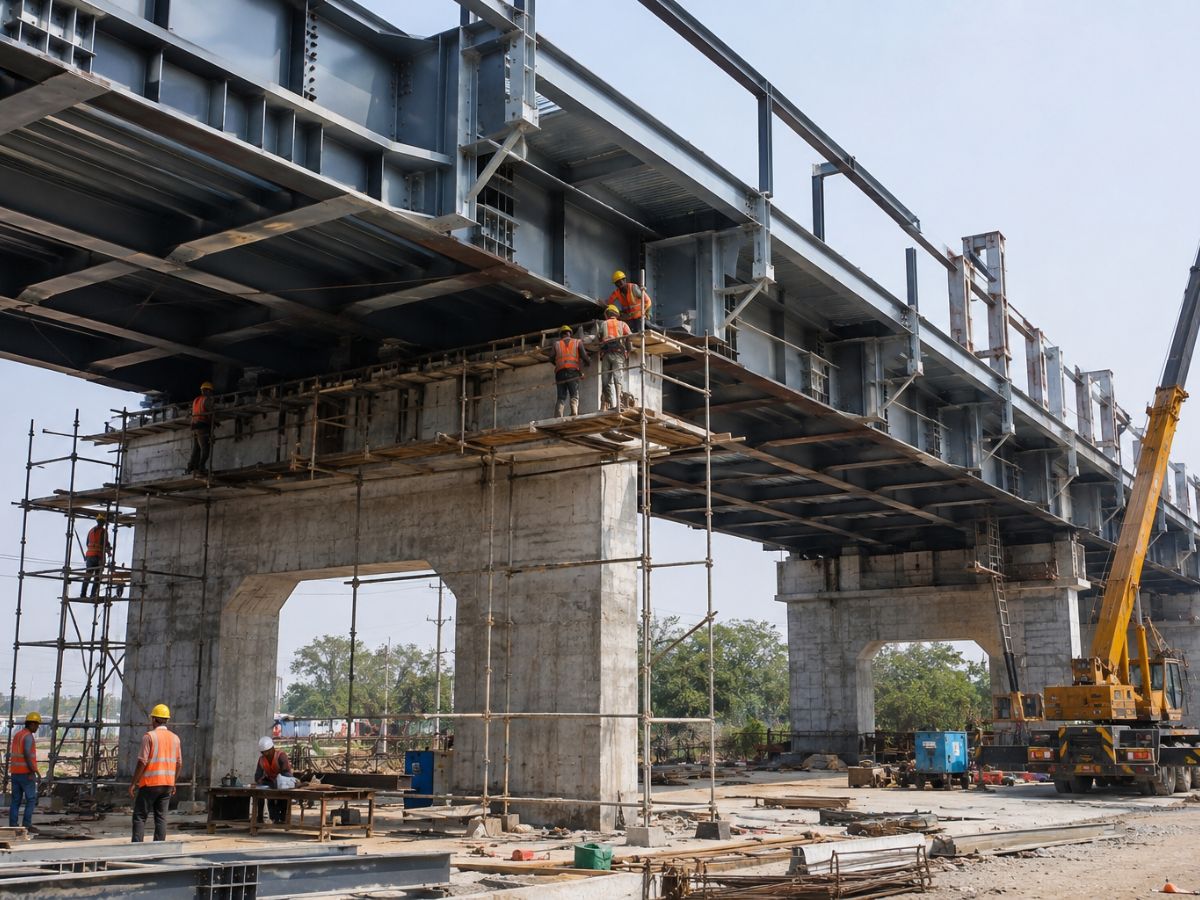
- Bridges and flyovers
- Infrastructure and government projects
- Agricultural buildings and storage facilities
- Steel fabrication and engineering projects
Application-Based MS Beam Selection
|
Application |
Recommended MS Beam Use |
|
Residential Buildings |
Roof support, floor framing, columns |
|
Commercial Projects |
Structural framework and load support |
|
Industrial Sheds |
Roof structures and heavy machinery support |
|
Warehouses |
Large-span structural framework |
|
Infrastructure Projects |
Bridges, platforms, and public structures |
|
Fabrication Industry |
Steel frames and customized structures |
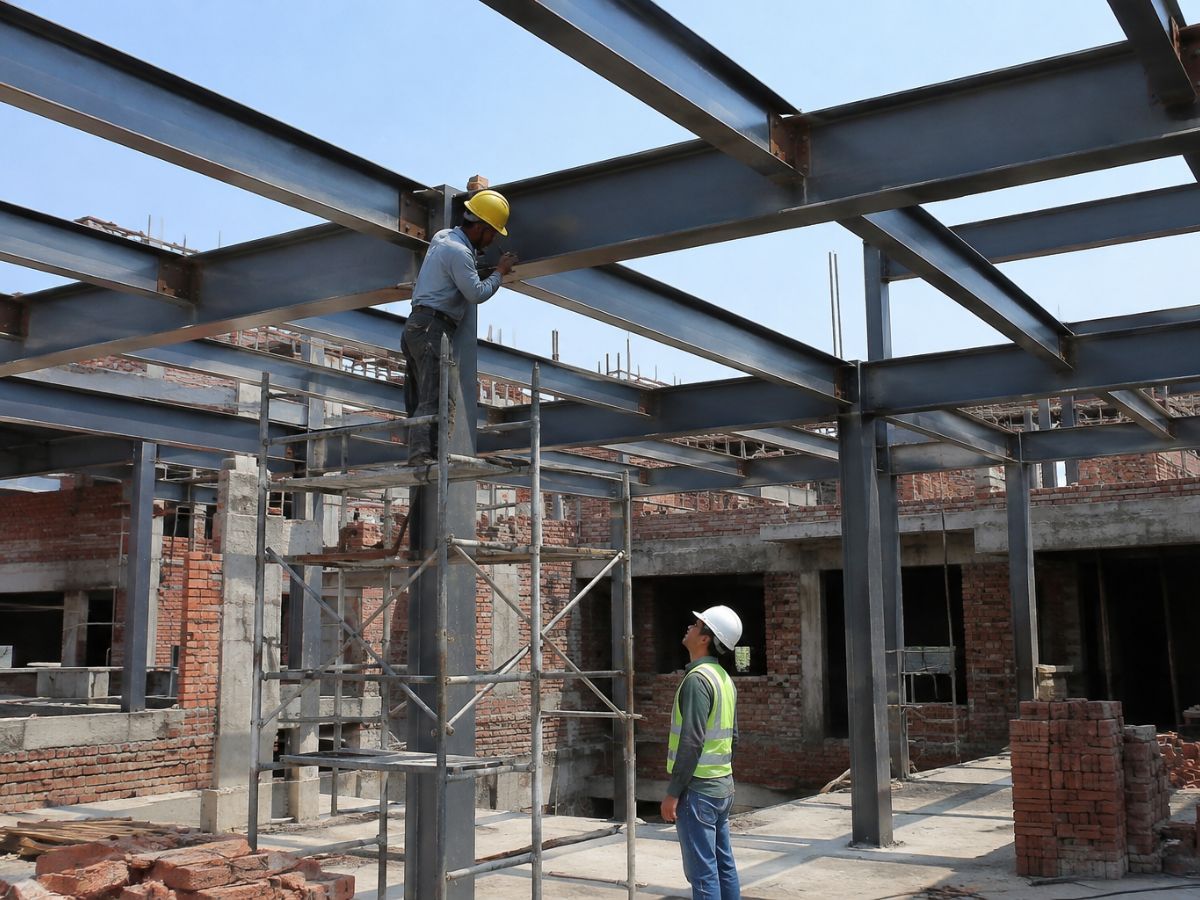
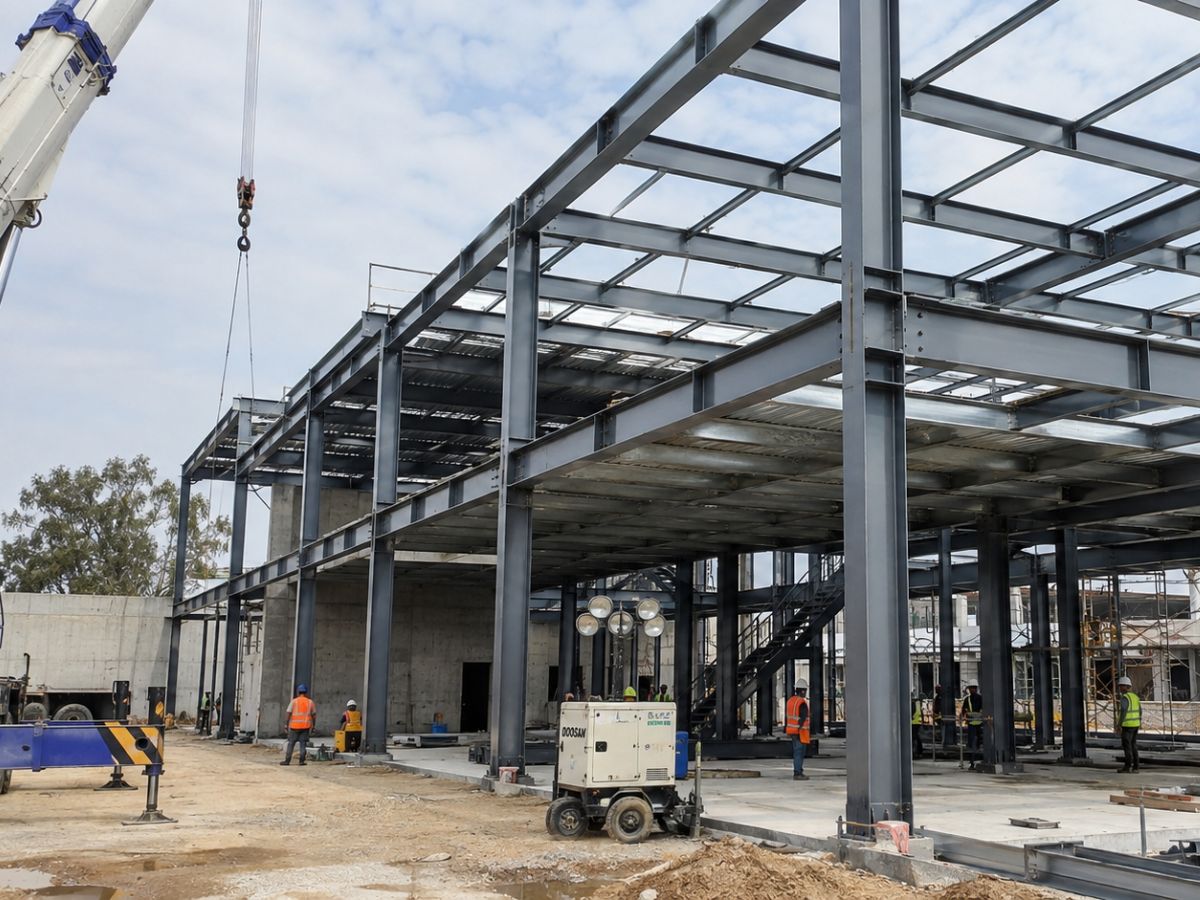
Residential Buildings Commercial Projects
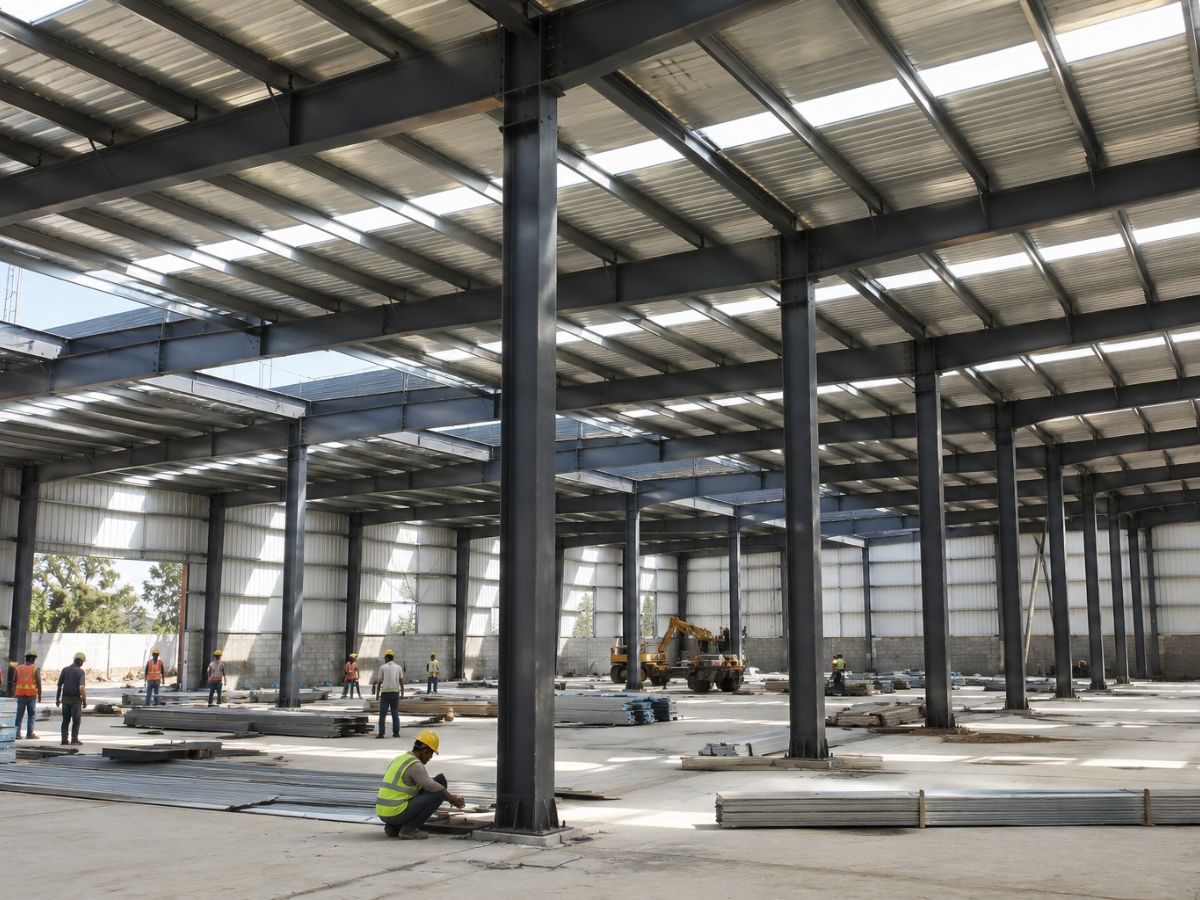
Warehouses Infrastructure Projects
Why MS Beams Are the Preferred Choice for Modern Construction
Construction professionals prefer MS beams because they offer the perfect balance of strength, flexibility, and affordability. Compared to many other structural materials, mild steel beams are easier to fabricate, install, and maintain, making them suitable for both small and large-scale projects.
Key Benefits of MS Beams
- High structural strength
- Excellent load-bearing performance
- Easy cutting, welding, and fabrication
- Long service life
- Cost-effective construction material
- Available in various sizes and ISMB sections
- Suitable for residential, commercial, and industrial structures
- Easy availability for new and ongoing projects
What Are the Best Features of a Popular MS Beam Product?
When selecting an MS beam, professionals generally look for products that deliver consistent structural performance and comply with industry standards.
The best structural steel beams typically offer:
- Premium-grade mild steel material
- Uniform dimensions and accurate specifications
- High strength-to-weight ratio
- Excellent weldability
- Reliable corrosion resistance with proper finishing
- Wide availability in standard MS I beam sizes
- Consistent quality suitable for heavy-duty applications
These features help improve structural safety while reducing long-term maintenance requirements.
Understanding MS I Beam Sizes & Specifications
Selecting the correct MS I beam size is one of the most important aspects of structural planning. The beam size directly influences load-bearing capacity, stability, and overall structural performance. Engineers generally select the appropriate beam dimensions based on the project type, span length, and expected load.
Kesar Steel offers MS beams in a variety of sizes suitable for residential buildings, commercial projects, industrial sheds, warehouses, and infrastructure developments. Choosing the right beam size helps improve structural efficiency while minimizing unnecessary material usage.
Common MS Beam Size & Weight Reference
|
Size (mm) |
Weight (kg/m) |
Size (mm) |
Weight (kg/m) |
|
100 × 50 |
8.00 |
160 × 74 |
17.90 |
|
100 × 70 |
11.50 |
175 × 85 |
19.20 |
|
120 × 58 |
11.10 |
200 × 100 |
25.40 |
|
125 × 70 |
13.20 |
250 × 125 |
37.20 |
|
140 × 66 |
14.40 |
300 × 140 |
45.10 |
|
150 × 75 |
15.00 |
400 × 140 |
62.60 |
|
150 × 150 |
37.10 |
500 × 180 |
87.70 |
Note: Beam weight may vary depending on manufacturing standards and product specifications. Always verify the required beam size before finalizing your project.
Understanding MS Beam Weight and Load Capacity
The MS beam weight plays an important role in structural design because it directly affects load calculations, transportation, installation, and overall project safety. Engineers often refer to standard weight charts or an MS I beam weight calculator to estimate the beam weight required for different construction applications.
Why Beam Weight Matters
- Helps determine structural load capacity
- Supports accurate engineering calculations
- Improves construction planning
- Simplifies transportation and installation
- Ensures better structural safety
How to Choose the Right MS Beam for Construction Projects
Selecting the right MS beam depends on much more than size alone. Every construction project has unique structural requirements, and choosing the correct beam improves both safety and long-term performance.
Before selecting an MS beam, consider:
- Type of construction project
- Expected structural load
- Span length
- Building design
- Required MS I beam sizes
- Applicable ISMB section
- Quality standards
- Supplier reliability
Choosing the correct beam at the planning stage helps avoid structural issues, unnecessary material costs, and future modifications.
Common Mistakes to Avoid When Selecting MS Beams
Choosing the right MS beam is just as important as selecting the right construction material. Even a high-quality beam may not perform efficiently if the wrong size or specification is selected. Understanding these common mistakes can help improve structural safety and avoid unnecessary project costs.
Mistakes to Avoid
- Selecting the wrong MS I beam size for the project.
- Ignoring beam weight and load-bearing requirements.
- Choosing products without checking quality standards.
- Purchasing only based on price instead of specifications.
- Overlooking the supplier's product availability and technical support.
- Not verifying beam dimensions before installation.
Avoiding these mistakes helps ensure better structural performance, reduced maintenance, and long-term reliability.
Industry Standards, Quality Checks & MS I Beam HSN Code
Quality plays a major role in the performance of any structural steel product. Before purchasing MS beams, it is important to verify that the product meets applicable industry standards and project specifications.
Important Quality Checks
- Standard beam dimensions
- Uniform thickness and finish
- Proper structural strength
- Quality manufacturing process
- Compliance with applicable Indian Standards
- Reliable material consistency
MS I Beam HSN Code
|
Product |
HSN Code |
|
MS I Beam |
72163200 |
Why High-Quality Structural Steel Beams Matter
Using premium-quality structural steel beams contributes to safer construction, improved structural stability, and better long-term performance. High-quality beams maintain dimensional accuracy, support heavy loads efficiently, and reduce the chances of structural defects over time.
Benefits of Quality MS Beams
- Improved structural stability
- Better load distribution
- Enhanced project safety
- Longer service life
- Reduced maintenance costs
- Reliable performance across different construction applications
Why Builders and Industries Choose Kesar Steel
Whether you're working on a residential project, commercial building, warehouse, industrial shed, or fabrication project, selecting a reliable steel supplier is equally important as selecting the right beam.
Kesar Steel supplies quality MS beams in multiple sizes to meet the needs of builders, contractors, fabricators, and industries across Gujarat.
Why Choose Kesar Steel?
- Wide range of MS beams for various applications
- Multiple MS I beam sizes available
- Quality structural steel products
- Support for residential, commercial, and industrial projects
- Reliable stock availability
- Timely supply across Gujarat
- Experienced assistance in selecting suitable steel products
Contact Kesar Steel for Quality MS Beams
Looking for the right MS beam for your next construction or industrial project?
At Kesar Steel, we offer a wide range of quality MS beams, structural steel products, and reliable supply solutions to support projects across Gujarat. Whether you need assistance selecting the right beam size or want a quotation for bulk requirements, our team is ready to help.
Visit kesarsteel.com to explore our MS Beam range and product specifications.
Need a quotation or product assistance? Simply fill out the Inquiry Form available on our website, and our team will get back to you with the right steel solution for your project requirements.
Frequently Asked Questions
What is an MS beam?
An MS beam (Mild Steel Beam) is a structural steel section used to support heavy loads in residential, commercial, and industrial construction projects.
What are the standard MS I beam sizes?
MS beams are available in multiple standard sizes to suit different structural requirements. The ideal size depends on the span, load capacity, and project design.
Where are MS beams commonly used?
MS beams are widely used in residential buildings, commercial complexes, industrial sheds, warehouses, bridges, factories, and infrastructure projects.
How do I calculate MS beam weight?
Beam weight can be determined using standard weight charts or an MS I beam weight calculator, based on the beam's size, length, and specifications.
What are the advantages of using MS beams?
MS beams offer excellent strength, durability, easy fabrication, cost-effectiveness, and reliable load-bearing performance, making them a preferred choice for modern construction.
Where can I buy quality MS beams in Gujarat?
You can explore a wide range of quality MS beams and structural steel products at Kesar Steel. Visit kesarsteel.com and submit the Inquiry Form to connect with the team for product details, pricing, and bulk order assistance.






Copyright © Kesar Steel
. All Rights Reserved. Design by Xira Infotech