MS Angle vs MS Channel: Which Is Better For Construction?
10th Mar 2026
Steel plays a vital role in modern construction and infrastructure development. Among the various structural steel sections used in building frameworks and fabrication projects, MS Angle and MS Channel are two of the most common options. Both steel sections are widely used because of their strength, durability, and versatility.
However, builders and contractors often compare MS angle vs MS channel when selecting the right structural component for their project. Each section has its own design advantages and specific applications. Understanding these differences can help engineers and construction professionals make better decisions for structural stability and long-term durability.
In this blog, we will explore the characteristics, applications, and benefits of these steel sections and also discuss how to choose the right MS angle for construction needs.
Understanding the Structural Design of These Steel Sections
Structural steel sections are designed to provide stability and load support in buildings, bridges, and industrial structures.
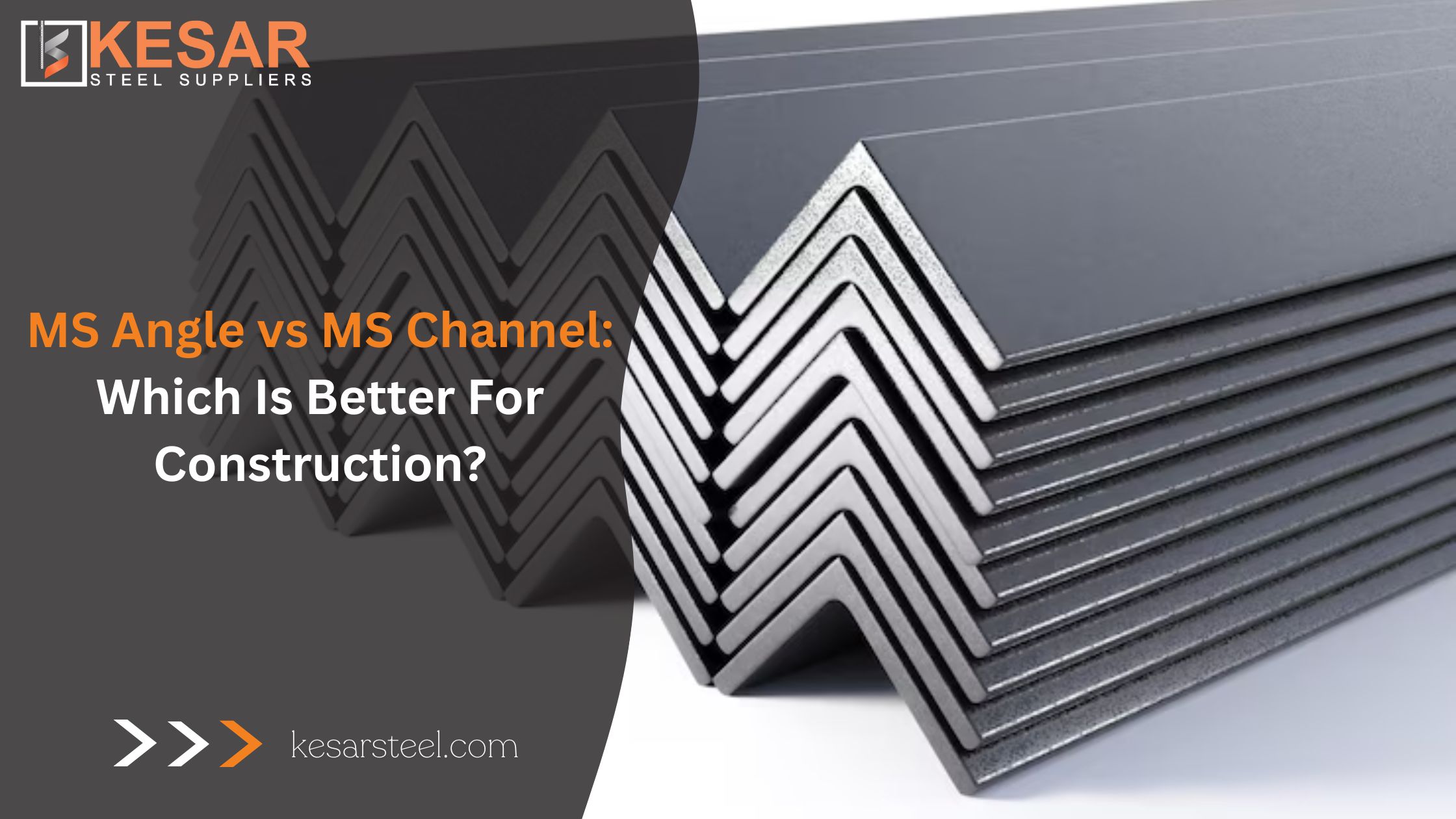
An MS Angle is an L-shaped steel section manufactured from mild steel. It consists of two legs that form a 90-degree angle. Because of this design, it provides excellent corner support and structural reinforcement.
A mild steel angle is commonly used in fabrication, frameworks, racks, towers, and other structural applications where strength and stability are required.
MS Channel, on the other hand, has a “C” shaped profile with a web and two flanges. This design makes it suitable for heavy load-bearing structures and horizontal support systems.
Both steel sections are important in construction, but their use depends on the structural requirements of the project.
Key Differences Between These Two Steel Sections
Understanding the differences between these steel components helps engineers select the most suitable material.
- Shape and Design
An MS Angle has an L-shaped profile.
MS Channel has a C-shaped structure. - Structural Strength
Angles are commonly used for reinforcement and corner structures.
Channels are designed to handle heavy loads in structural frames. - Installation Flexibility
Angles are easier to fabricate and install.
Channels are preferred for larger structural frameworks. - Construction Applications
Many contractors rely on MS angle uses in construction because angles can be used in multiple applications such as framing, support structures, and industrial fabrication.
Channels, however, are typically used in beams, structural frames, and machinery supports.
Applications in Construction and Fabrication
Structural steel sections are essential for multiple industries including construction, infrastructure, and manufacturing.
Some of the common applications include:
- Construction Frameworks
Angles and channels are widely used in structural frameworks of buildings and warehouses. - Fabrication Work
They are used in the manufacturing of machinery frames, industrial racks, and support structures. - Infrastructure Projects
Steel sections are important components in bridges, towers, and transportation infrastructure. - Equipment Support
Industrial plants use these steel sections to support heavy equipment and machinery.
Because of their versatility, contractors often analyze the MS angle sizes and weight chart before selecting the right structural steel for their project.
How to Select the Right Steel Section for Your Project
Selecting the correct steel section depends on the structural requirements, load conditions, and design specifications of the project.
Here are some important factors to consider:
- Load Requirements
For lightweight structures and reinforcement applications, angles are often sufficient. Heavy structural frameworks may require channels. - Structural Design
Angles are ideal for corner support and framing. Channels provide strong support in horizontal structures. - Fabrication Requirements
Angles are easier to cut, weld, and fabricate, making them suitable for custom fabrication work. - Size and Weight
Construction professionals usually refer to the MS angle sizes and weight chart to determine the appropriate dimensions for their project. - Supplier Reliability
It is important to work with a reliable MS angle supplier in Vapi who can provide high-quality structural steel products.
Importance of Quality Steel in Construction
Using high-quality structural steel is essential for ensuring safety and durability in construction projects.
Reliable steel products offer several advantages:
- Improved structural stability
- Long-term durability
- Better load-bearing performance
- Reduced maintenance costs
- High resistance to environmental conditions
Working with the best MS angle supplier ensures that the steel used in construction meets industry standards and quality requirements.
Why Choose Kesar Steel
When it comes to structural steel products, choosing the right supplier is just as important as selecting the right material.
Kesar Steel is a trusted name in the steel industry and provides high-quality steel products for construction and industrial applications.
The company offers a wide range of structural steel products through its website https://kesarsteel.com/.
Key Reasons to Choose Kesar Steel
- Wide range of structural steel products
- Reliable quality and industry standards
- Competitive pricing for bulk requirements
- Experienced team with industry knowledge
- Strong supply network for timely delivery
Businesses looking for a bulk MS angle supplier can rely on Kesar Steel for consistent quality and dependable supply.
The company also works with builders, contractors, and fabrication units that require reliable structural materials for their projects.
Conclusion
Structural steel sections are essential components in modern construction and fabrication projects. While both angles and channels offer strong structural support, the choice between them depends on project requirements, design considerations, and load conditions.
Understanding the differences between these steel sections helps builders and engineers select the most suitable material for their projects. By evaluating factors such as structural design, load-bearing capacity, and fabrication needs, construction professionals can make informed decisions.
Looking for high-quality structural steel for your construction project?
Visit Kesar Steel today and connect with a trusted supplier for reliable steel solutions and professional support for your building and fabrication needs.






Copyright © Kesar Steel
. All Rights Reserved. Design by Xira Infotech